

Our childhood experiences are all unique to us and become etched into the fabric of who we are. No two stories are the same. Even siblings who grow up under the same roof inhabit different emotional worlds, shaped by subtle moments no one else sees.
Though childhood may only be one chapter of our lives, it shapes our adult worlds in profound ways, becoming the blueprint for how we love, how we trust, and how we perceive and understand the world.
When we’re children, we absorb far more than words; from tone, tension, silence and atmosphere to fear, anger, abuse, or absence. We learn, without realising, what is safe and what is not, who we can be and who we must become to survive.
Many adults come to therapy carrying the heaviness of trauma from their childhoods. Some are aware of significant moments that were clearly painful or frightening. Others may carry an inner weight they cannot explain, yet feel chronically anxious, overwhelmed, or disconnected.

Subscribe to stay updated with the latest blog posts from Leone Centre.
All experiences matter because trauma is not only about what happened, but about the meanings we made as a child, and the beliefs that grew from it, that we carry with us.
“We may not be responsible for the world that created our minds, but we can take responsibility for the mind with which we create our world.” – Gabor Mate
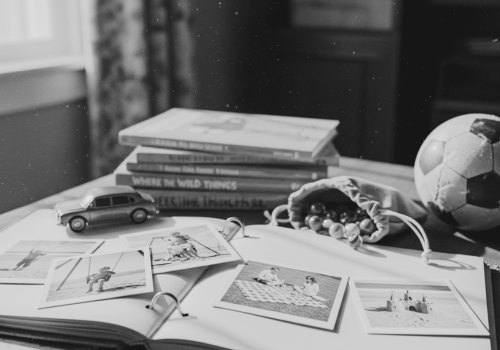
Therapy offers a steady and compassionate space to gently unpack and heal childhood trauma. With approaches such as Integrative counselling, Trauma-informed therapy and EMDR, painful memories can be processed in ways that feel safe and empowering. Outdated narratives can be updated, and emotional injuries can be mended.
Healing is possible, and with it comes the possibility of leaving survival mode and reclaiming your sense of safety, wholeness, and freedom.
What Is Childhood Trauma?
Childhood trauma refers to experiences that overwhelm a child’s capacity to cope, particularly when there is insufficient protection, safety or emotional support.
Trauma is not defined solely by dramatic events; it is defined by impact. What an adult might normalise, rationalise or have the understanding to endure can feel overwhelming, frightening, or deeply destabilising to a child.
Childhood trauma can cover a broad range of experiences, including:
- Divorce or high-conflict households
- Addiction within the family
- Chronic unpredictability at home
- Domestic violence
- Physical, emotional or sexual abuse
- Abuse from siblings
- Parental emotional instability or mental illness
- Illness, chronic conditions, or regular hospital stays
- Enmeshment or blurred boundaries
- Adoption or attachment disruption
- Boarding school or prolonged separations
- Frequently moving schools or cities
- Moving country and losing culture, community and familiarity
- Absent or emotionally unavailable parents
- Bullying (including cyberbullying)
- Racism, discrimination, or marginalisation
- Gaslighting or reality distortion by caregivers
- Death of a parent, sibling, or primary caregiver
- Being shamed for temperament, sensitivity, or neurodivergence
Even experiences that appear manageable on the surface can profoundly affect a child’s sense of safety or emotional development, especially if they feel alone in navigating it.
Trauma is often relational, meaning it occurs through our relationships with others, such as our parents or caregivers. It lives in what was repeated, what was missing, and what a child had to carry without support.
The Vulnerability of Children and the Origins of Trauma
Children are extraordinarily vulnerable. They depend entirely on the adults around them for safety, stability and regulation. In the earliest years of life, connection is not simply emotional comfort, it is essential for survival. Because of this, children cannot step outside their environment, question things, or make changes. They don’t understand enough yet to say “This isn’t right” or do anything about it.
Children absorb everything as unquestioned truth; what happens around them becomes what feels normal within them.
For example, if a parent is emotionally volatile or there is addiction, the child does not conclude that the parent is struggling, nor do they analyse the wider context. Instead, the child internalises the adult’s aggression and learns how to minimise themselves and tread carefully. The child learns to read emotional weather before it turns into a storm. Home becomes somewhere to brace rather than somewhere to rest.
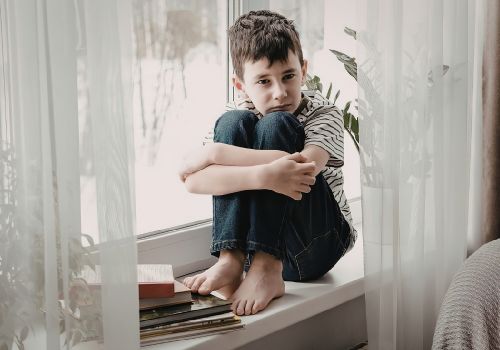
Children adapt automatically. They might learn to disassociate or experience maladaptive daydreaming to cope with an unstable world, retreating into an inner world that feels safer and more controllable. If the very person who is meant to protect them is also the source of fear or harm, the child faces an impossible dilemma: the need to attach collides with the need to protect themselves. Often, attachment wins because survival depends on it.
Similarly, a child who moves abroad or who frequently moves schools may experience the disorientation of losing familiarity, friends, and extended support systems. Even when the move is positive or full of opportunity, the child may quietly internalise the instability; friendships lost, cultural cues unfamiliar, a sense of otherness. Their system may learn that safety can disappear without warning.
If there’s parental absence or adoption, the child may grow up carrying an unspoken question of “Why wasn’t I enough for them to stay?” Even when the absence is unavoidable, the nervous system can register it as abandonment, shaping beliefs around worth, reliability and love that echo long into adulthood.
The Beliefs We Carry from Childhood
Alongside these adaptations, beliefs begin to take root, often silently and without language. They settle beneath awareness and become the lens through which everything else is interpreted.
Beliefs formed from childhood trauma can include:
- I am too much
- I can’t trust people
- I am not enough
- My needs are inconvenient
- I must hold everything together
- I cannot rely on anyone
- Love is unpredictable
- It is my fault
- The world is not safe
- People are not safe
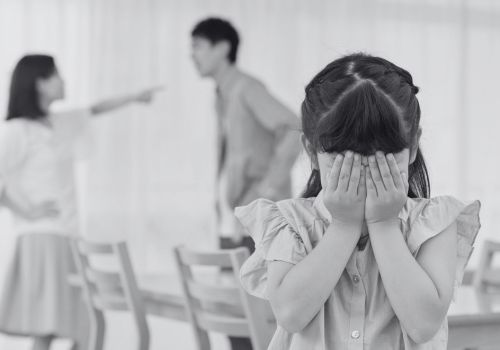
A child who experienced abuse from a caregiver may carry a particularly painful distortion: “The people who love me will hurt me,” or “If something goes wrong, it must be my fault.”
An adopted child may unconsciously hold the belief, “I was left because I was unlovable.”
A child repeatedly uprooted by moves may internalise, “Nothing lasts,” or “I don’t truly belong anywhere.”
Children do not question these beliefs or test them against logic. They absorb them as fact. There is no internal debate, no counterargument. What is repeated becomes what is real.
This is the programming of childhood.
The Emotional Impact of Childhood Trauma in Adulthood
Strategies that once kept us safe as children can quietly shape our adult lives.
You might notice yourself over-giving in relationships while feeling unseen, as though love must still be earned through usefulness. You might struggle to rest without guilt, because productivity once secured approval. You might fear abandonment even in secure partnerships, your body bracing for a loss that has not happened. You might feel anxious without knowing why, or numb when you wish you could feel more.
Someone who experienced absence may find that separation triggers them, such as when a partner pulls away or a friend becomes distant. It may feel disproportionately painful, touching an old wound of rupture.
Someone who moved frequently in childhood may keep relationships at arm’s length, pre-emptively detaching before life inevitably shifts again.
Common patterns include:
- People pleasing and difficulty setting boundaries
- Perfectionism and over-functioning
- Fear of rejection or abandonment
- Emotional shutdown
- Addiction
- Hyper independence
- Persistent anxiety
- Intense reactions that feel disproportionate
Underneath these patterns is often an old belief still running the system.
It’s important to remember that these responses are not flaws in your character. They are intelligent survival strategies that were formed in response to instability, abuse, absence or harm.
“Everything you judge about yourself served a purpose at the time.” – Gabor Mate
The difficulty is that living in survival mode prevents us from thriving and living in real safety. What protected you as a child may now be restricting you as an adult.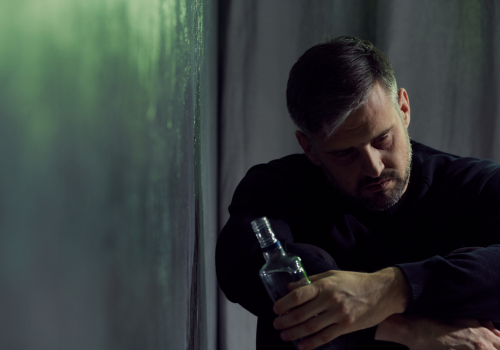
Healing Trauma as an Adult
Healing childhood trauma begins with self-compassion and curiosity. Whether in therapy or simply journaling alone, it can be helpful to ask questions such as:
What did you come to believe about yourself as a child?
What did you learn about love and safety?
What role did you have to play in order to belong?
Unpacking beliefs means gently bringing these early conclusions into awareness. It means recognising that the child who formed them did so with limited understanding and limited power.
You might discover you’ve been carrying unhelpful beliefs such as:
- I have to manage everyone’s emotions
- I can’t trust anyone or I will experience harm
- People always leave
- I am unworthy of love
- If I show my needs, I will be rejected
- I must be strong at all times
- Conflict means I will lose connection
- Independence is safer than connection
Exploring these beliefs safely and gently in therapy is an important step towards healing trauma. An experienced and qualified therapist has the tools to support you by going at the appropriate pace, with empathy and understanding.
Meet our team of highly experienced therapists.
Types of Therapy for Childhood Trauma
To support trauma recovery, a combination of modalities can be helpful.
Integrative Therapy
Integrative therapy combines elements from different therapeutic approaches, including psychodynamic therapy, CBT, DBT, attachment-based work and somatic techniques. Rather than following a single model, it draws on a range of evidence-based strategies to meet the individual needs of adults healing from childhood trauma. Cognitive and behavioural techniques may help challenge long-standing unhelpful beliefs and improve emotional regulation, while psychodynamic and attachment-focused work explores early experiences and relational patterns that continue to affect adult life. This flexible approach supports deeper healing, resilience and long-term emotional growth.
Trauma-informed therapy
Trauma-informed therapy approaches this work with a deep sensitivity to the nervous system and to the lasting impact of relational wounds. It shifts the question from “What is wrong with you?” to “What happened to you?”, recognising that many symptoms are protective adaptations to overwhelming experiences. It honours the ways you survived and coped, even when those strategies no longer serve you. Therapists trained in trauma-informed practice prioritise safety, choice and collaboration, working at a pace that feels manageable and respectful, while supporting the gradual rebuilding of trust, regulation and self-understanding.

EMDR therapy
EMDR therapy, or Eye Movement Desensitisation and Reprocessing, can be particularly powerful in healing childhood trauma. When overwhelming experiences are not fully processed at the time, they can remain stored in the nervous system in a heightened and emotionally charged form.
EMDR for Trauma Recovery
EMDR helps the brain reprocess these memories so they no longer feel as though they are happening in the present. As the emotional charge softens, the beliefs attached to those memories can begin to shift.
For example, the belief of “I am not safe” can gradually become “I am safe now.”
Or “It was my fault” can soften into “I was a child.”
Healing does not erase the past, instead, it allows you to update it. It allows the adult you are now to step in where protection was once missing.
Childhood trauma shapes us, but it does not have to define us.
The beliefs formed in vulnerability can be gently examined, understood and rewritten. With the right support, it is possible to move from autopilot survival to conscious, compassionate choice.
And that is where real healing begins.
Move Forward with Resilience, Empowerment and Clarity
You are not alone. Many people come to therapy because their painful or confusing experiences in childhood are impacting their lives today. We have a carefully-selected team of highly experienced and qualified therapists available at Leone Centre, both online and in-person in London.
Book an initial consultation with one of our accredited therapists at Leone Centre.
- About the Author
- Latest Posts

Co-founder and director of Leone Centre, 20+ years of experience supporting people, and offering valuable knowledge through Couples Counselling and Individual Counselling. Before becoming a therapist, I worked in the financial sector.


