

On this International Women’s Day 2026, we celebrate progress. We spotlight achievement. We applaud resilience.
But beyond the headlines and the milestones, there are quieter stories, the stories of women who rarely make the news, ones that live not in public victories, but in private responsibility.
Mothers, sisters, daughters, partners, girlfriends, grandmothers, aunties, managers, nieces, assistants. Quietly carrying everyone else. Remembering birthdays, smoothing over conflict, anticipating needs, and holding the emotional atmosphere of her home, workplace and relationships. They do not just manage tasks; they hold the tension, soften the conflict, and repair the rupture.
This is not a weakness. It is competence. It is sensitivity. It is relational intelligence.

Subscribe to stay updated with the latest blog posts from Leone Centre.
And yet, when that capacity becomes an expectation, when being the emotional anchor leaves little space to drift, to falter, to be held, the cost can be profound and exhausting.
Invisible emotional labour, most often carried out by women, can take a profound toll on mental health. The constant tracking, soothing and managing of others’ needs can quietly contribute to anxiety, burnout, resentment and depression.
Supporting others should not require self-abandonment. It is worth asking: do women carry these mental and emotional burdens because we choose to, or because we feel no one else will?
Empowerment is not about doing more. It is about negotiating what is yours to hold, finding your voice, reclaiming your limits and find the courage to allow yourself to be supported as well as be supportive.
At Leone Centre, we often see how this hidden burden shows up in therapy, in exhaustion that has no obvious cause, in relationships that feel unbalanced, in women who are praised for coping while quietly depleted. In this post, we explore the mental impact of emotional and cognitive labour on women, and why seeking support is not a weakness, but a powerful act of self-care.

Understanding Invisible Emotional Labour
Emotional labour is the often-unseen work of managing emotions, both our own and other people’s, to maintain harmony, connection, and stability.
It looks like:
- Monitoring everyone’s mood at a family gathering
- Anticipating conflict and pre-emptively diffusing it
- Being the “go-to” person for emotional support
- Keeping track of household logistics without being asked
- Softening feedback to protect someone’s ego
- Carrying the mental load of remembering what must be done
And the imbalance is not imagined but backed by research.
Studies consistently show that in heterosexual partnerships, women disproportionately carry the mental load and emotional labour, even when both partners work full-time.
A 2019 Study by Ciciolla and Luthar, found that tasks involving planning, organising, anticipating needs and supporting others, tended to fall to women even when both partners were employed. This unequal burden was linked to increased stress, lower relationship satisfaction and strain on mothers’ wellbeing.
A 2023 systematic review systematic review further found that women shoulder more of the mental labour associated with childcare and parenting decisions. These women were more likely to experience increased stress as well as lower life and relationship satisfaction.

The Impact of Invisible Emotional Labour on a Woman’s Career
The impact of invisible emotional labour extends beyond a woman’s personal life; it follows her into the workplace.
There is a persistent myth that career-focused or high-earning women are less likely to take on this unequal mental load. Research shows otherwise.
A 2025 study from the University of Bath and the University of Melbourne found that successful career women still shoulder the majority of the mental load at home regardless of employment status or earnings.
A broader 2024 sociological study, using data from 10 European countries found that this cognitive and emotional labour (such as planning, anticipating problems and mentally coordinating family life) affected men and women differently.
The more of this invisible load women carried, the more exhausted they felt at work. For men, the same predictive relationship did not appear.
The difference highlighted was not in just how much cognitive labour is done, but what kind.
The research found that:
- Women tend to do high-frequency, complex, low-control tasks such as daily family planning and coordination, tracking of medical or school appointments, managing regular bills and anticipating upcoming family needs.
- These tasks require constant mental effort.
- They usually get little recognition for doing them.
So it’s an effort–reward imbalance: High effort + low acknowledgment = exhaustion.
Meanwhile, men’s cognitive tasks may:
- Be more occasional
- Be more visible
- Get more acknowledgment
Why This Matters Beyond the Home
When women arrive at work mentally exhausted:
- They may decline overtime hours
- They may avoid high-stakes projects
- They may be perceived as less promotable
Over time, this reinforces structural inequality, including the Glass Ceiling Effect.
And its cost is not just slower promotion, but anxiety, burnout, resentment, and emotional depletion.

The Good Woman Script: How Cultural Archetypes and Social Conditioning Shape Self-Abandonment
There is a particular loneliness in being the woman who holds everything together. Not because she is alone, but because she is surrounded and unseen.
This is not simply about poor boundaries, but social conditioning.
From a young age, many women inherit archetypes before they have language for them: the Good Girl, the Caregiver, the Strong One, the Emotional Anchor. These roles quietly teach that a woman’s value lies not in who she is but in what she provides.
She learns that harmony is her responsibility. That conflict must be softened. That anger should be translated into patience or silence. She learns that to be needed is to be loved, and to need to much herself is to be a burden.
Often, this message is reinforced with praise:
“You’re so mature.”
“You’re the glue of this family.”
“You’re so strong.”
But strength becomes a trap when it leaves no room for vulnerability or self-prioritisation.
Over time, she becomes highly attuned to others, tracking moods, anticipating problems, regulating tension, while growing disconnected from her own feelings. When asked, “What do you need?” she hesitates.
Not because she has no needs, but because she has learned not to voice them.
This is how self-abandonment develops.
Cultural narratives reward women for shrinking their emotional footprint. The “low-maintenance” partner. The “easy-going” colleague. The mother who “does it all.” Emotional labour becomes invisible precisely because it is expected. And what is expected is rarely acknowledged.
The mental health cost accumulates. Constant vigilance can become anxiety. Feeling unseen can turn into depression. Resentment builds beneath guilt. Many women arrive in therapy exhausted in ways they struggle to explain, tired not only from tasks, but from carrying the emotional climate of every room.
The very qualities women are praised for, empathy, devotion, emotional intelligence, can become harmful when they flow in only one direction. When boundaries are labelled selfish. When saying “no” feels unsafe.
Reclaiming yourself is not selfish. It is necessary.
It begins with asking:
- What do I feel?
- What do I need?
It means recognising that being loved for sacrifice is not the same as being loved for being.
Healing is not about becoming less caring. It is about allowing care to flow inward too.
There is nothing more restorative than the permission to exist without performance.

The Psychological Cost of Constant Caretaking
When emotional labour becomes chronic and one-sided, the psychological cost to women can be significant.
In integrative counselling, this can present as:
- Burnout and persistent fatigue
- Anxiety and hypervigilance
- Resentment within intimate or family relationships
- A diminished sense of identity outside caregiving roles
- Depressive symptoms linked to feeling unseen or undervalued
- Heightened rejection sensitivity and over-responsibility for others’ emotions
How often do women find themselves saying:
“If I don’t do it, it won’t get done.”
“It’s just easier if I handle it.”
“I don’t want to be difficult.”
Over time, this creates a quiet erosion of self.
Because when you are constantly managing everyone else’s emotional world, you abandon your own.


The Intersection With ADHD and High Sensitivity
For women who are neurodivergent, particularly those with ADHD, the dynamic can be amplified.
ADHD women often develop hyper-attunement as a coping mechanism:
- Reading micro-expressions
- Over-analysing tone shifts
- Internalising rejection
- Working overtime to prevent conflict
Rejection sensitivity (RSD) can intensify the drive to over-function emotionally.
The result? Emotional burnout masked as competence.
At Leone Centre, we recognise this intersection, that mental health is not just internal, but relational and systemic.

How Therapy Helps: From Silent Endurance to Self-Reclamation
Many women come to therapy not because everything has collapsed, but because they are quietly fraying. They are high-functioning, capable, reliable, the strong one.
Yet beneath that competence lives a chronic exhaustion that rest does not seem to fix.
Integrative counselling makes invisible emotional labour visible. It gives language to what has long been normalised.
1. Making the Invisible Visible
One of the first shifts in therapy is language. When a woman realises that what she carries has a name, emotional labour, mental load, over-functioning, hyper-responsibility, shame begins to loosen.
The narrative shifts from “I’m too sensitive” or “I just need to cope better,” to:
“I have been holding more than my share.”
That distinction matters profoundly for women’s mental health.
2. Understanding the Pattern, Not Just the Symptom
An integrative approach looks at the whole system:
- Family dynamics and early conditioning
- Cultural expectations of femininity
- Attachment patterns in relationships
- Neurodivergence, including ADHD and rejection sensitivity
- Workplace roles and relational hierarchies
We explore not just what you do, but why stopping feels unsafe.
Often, emotional over-functioning once protected you. It gained approval and prevented rejection. It created stability.
Therapy honours that history while gently asking whether it still serves you.
3. Rebuilding Boundaries Without Guilt
For many women, boundaries feel like betrayal.
Saying “no” triggers anxiety. Delegating feels irresponsible. Asking for help feels weak.
In therapy, we practise:
- Assertive communication that maintains connection
- Tolerating discomfort without rescuing others from it
- Allowing other adults to manage their own emotions
- Differentiating love from self-sacrifice
Boundaries are not walls. They are clarity. And clarity reduces resentment, a key factor in relationship dissatisfaction and emotional burnout.
4. Addressing Burnout and Anxiety at the Root
Chronic emotional labour often manifests as:
- Generalised anxiety
- Irritability in close relationships
- Loss of libido
- Emotional numbness
- Depression rooted in feeling unseen
Rather than treating these as isolated symptoms, integrative therapy understands them as signals of imbalance.
When the emotional load redistributes, nervous systems settle.
When responsibility becomes shared, intimacy often returns.
5. Reclaiming Identity Beyond Caretaking
Perhaps the most powerful work is this:
Rediscovering the woman who exists beyond what she does for others.
What do you want?
What energises you?
Who are you when you are not managing everyone else’s world?
Therapy becomes a space of reorientation, from perpetual responder to active chooser.
And this is not selfish. It is psychologically necessary.
This International Women’s Day, support for women’s mental health means more than celebration. It means creating spaces where women no longer have to carry everything alone.
And that is not indulgence. It is repair.
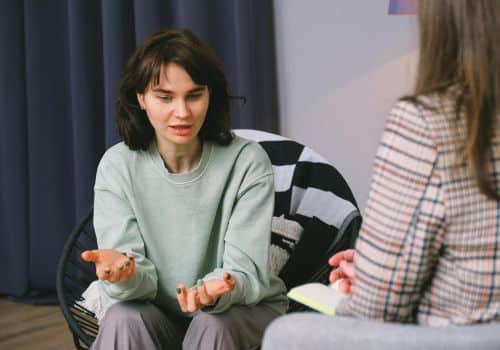
Women’s Mental Health Support at Leone Centre — You Don’t Have to Carry It Alone
Invisible emotional labour is not a personality trait. It is not proof of strength. And it is not the price of being a “good” woman.
When chronic mental load, constant caretaking and emotional over-responsibility begin to impact your wellbeing, the answer is not to try harder. It is to pause and recognise the cost. Anxiety, burnout, resentment and depression are not personal failures; they are signals that the balance has tipped too far.
At Leone Centre, we understand how invisible emotional labour affects women’s mental health, relationships and careers. Through integrative counselling, we help women move from silent endurance to clarity, boundaries and a stronger sense of self.
Our experienced therapists are here to help, available both in person in London and online.
If you recognise yourself in this article, seeking therapy is not indulgent, it is a powerful step towards restoring balance, protecting your mental health and reclaiming your identity beyond caregiving.
You do not have to keep holding everything together alone.
- About the Author
- Latest Posts

Co-founder and director of Leone Centre, 20+ years of experience supporting people, and offering valuable knowledge through Couples Counselling and Individual Counselling. Before becoming a therapist, I worked in the financial sector.