

You wake one morning and the world seems to have changed. As you reach for your cereal, it feels as though morning hasn’t fully arrived. At 4 p.m., darkness begins its slow creep, and when you leave the office the streets are lit by streetlamps rather than daylight. You ask yourself: “Why do I feel this way?” This isn’t simply the winter blues. What you’re experiencing may be the subtler, more insistent form of sadness known as Seasonal Affective Disorder (SAD).

What is SAD? And why as the clocks turn you might “feel SAD”
When the clock turns back, something inside us often turns too. The lengthening darkness, the fading daylight, the quiet after-work landscape. These shifts resonate not only with our external world, but with our internal world of feeling, relationship and rhythm.
Imagine you had a relationship with the sun. The sun rose early, filled your kitchen with warmth while you made your breakfast, accompanied your walks, lit your conversations. Now the sun arrives later, departs earlier, and your companion withdraws. You may feel abandoned, unseen, slowed. Your internal dialogue might collude: “Why can’t I rouse myself? Why am I less motivated, more fatigued, more distant even from people I love?”

Subscribe to stay updated with the latest blog posts from Leone Centre.
That’s the relational language of SAD: a disruption of rhythm, a dimming of vitality, a shifting in how you relate to your own mood and to the world. It’s not simply “I’m getting sad”, it’s: “I’m out of sync with the season, with my body and with the day.”
For this time of year, you might experience the “autumn-onset” type of SAD, also known as “Winter depression”. Some common signs of SAD may include:
- Increased sleep and daytime drowsiness
- Loss of interest and pleasure in activities formerly enjoyed
- Social withdrawal and increased sensitivity to rejection
- Grouchiness and anxiety
- Feelings of guilt and hopelessness
- Excessive tiredness (fatigue)
- Decreased sex drive
- Decreased ability to focus
- Increased appetite, especially for sweets and carbohydrates which can result in weight gain.
- Physical problems, such as headaches
At Leone Centre we recognise that this is data and story: your inner seasonal shift is meaningful. You’re not weak, you’re responding to a change in light, rhythm and context.

How many of us are affected by SAD?
Many people dismiss the “winter blues” as either a personal weakness or an irrational frustration. You were fine a month ago. Surely, it’s something you should just be able to think your way out of, right? But the statistics tell a different story. They show that you’re not alone, and that what you’re experiencing is real.
Did you know that:
- In the UK, about 3 people in every 100 have what is termed “significant winter-onset depression” or Seasonal Affective Disorder (SAD). This amounts to an estimated 2 million people.
- In these figures, SAD is almost three times more common in women than in men.
- A UK survey found that just over 35% of the population say their mood is affected in the darker autumn and winter months (some suspect SAD, some diagnosed).
- Globally, about 10% of people in Northern latitudes are affected by SAD.
What this tells us: you may not (yet) carry a formal diagnosis, but many feel the shift. The shorter, darker days, the sense of shrinkage in your life-space, these are real.
The Science Behind Why Shorter Days and Less Light Matter
Stepping into the science behind SAD gives us clearer insight into its causes and, in turn, how we can address it, when we understand the how, we can meet the what with greater compassion.
Light, the Biological Messenger
Your brain keeps time. Your body keeps rhythm. One key regulator is your internal clock, your circadian rhythm. When daylight decreases, your internal clock gets less signal.
The hormone melatonin, which helps us sleep, gets produced more when it’s darker; meanwhile, serotonin, a neurotransmitter linked to mood, appetite and sleep, may decrease.
So: less light → changes in melatonin and serotonin → disruption of rhythm → mood, sleep, energy disturbances.
The Relational Story of Rhythm
Imagine your day as a dance between light and dark. When the rhythm shifts, you may lose your place in the music. You might stumble, pause, step back, or retreat. That’s what SAD often feels like.
Researchers say that while we don’t know exactly why some people develop SAD and others don’t, the reduction in daylight seems to play a crucial role.
Additional contributing factors
- Vitamin D levels in the body may drop when sunlight is reduced. Vitamin D boosts serotonin levels, the feel-good neurotransmitter. Therefore, a drop in Vitamin D can have an impact on mood.
- Lifestyle changes: during darker months, many of us reduce activity, social time and time outside. All of these shifts can magnify the effect on our internal emotional landscape.
- There is also evidence of circadian misalignment: the body’s “day” clock falls out of sync with external daylight.

Why It Matters in The Context of Therapy
In therapy, we consider you as a whole, integrated being, someone shaped by biology, environment, relationships and lived experience.
What we address is not just “low mood.” Instead, we explore how this seasonal shift shows up across your entire system:
- Your rhythms: sleep, waking patterns, meal times, movement
- Your relationship to light: time spent outdoors, daylight exposure
- Your internal dialogue: how you speak to yourself when you feel “off”
- Your physical experience: changes in energy, appetite, sleep, or body sensations
- Your relational world: withdrawal, reduced social contact, or feeling less present
This integrative lens matters because the cause is not just in the brain, or the calendar, but in the whole of you, in your environment, your body, your story.
How Therapy Can Help with SAD
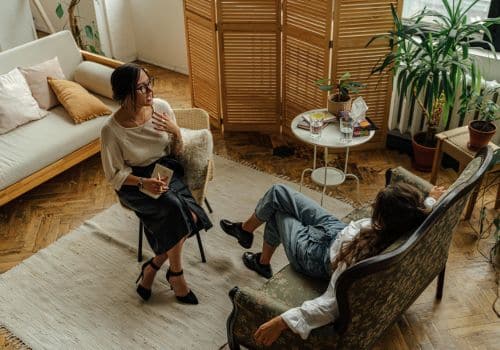
Therapy offers a space to approach this seasonal shift with curiosity, empathy, and grounded action.
It becomes a relational map, a place where your inner world is invited to speak:
“Tell me what is happening when the daylight recedes. Show me the ways I shrink, the ways I pull back, the ways I long for expansion.”
Nothing is pathologised here. Instead, patterns are listened to, explored, and understood.


What You Might Explore in Therapy
- Narrative exploration: How do you speak to yourself when you feel “low”? What story forms around the darker nights, your energy, or your productivity? Therapy invites these narratives into the open so they can be understood rather than absorbed unquestioned.
- Rhythm and embodiment: Attention is given to sleep–wake patterns, movement, nutrition, and exposure to light. Even small adjustments in daily rhythm can create meaningful shifts in mood and energy.
- Light and environment: Therapy includes examining how your surroundings support — or work against — your relationship with light. This might involve experimenting with morning routines, spending time outdoors earlier in the day, or using light more intentionally in your living space.
- Relational reconnection: Because SAD often draws people inward, there is space to explore how your relationships (with friends, family, work) respond to this seasonal change. Where are you leaning in, and where are you leaning out?
- Preventive orientation: The aim is not only to ease low mood in the moment but to develop an ongoing, empowered relationship with seasonal shifts. One that is grounded in awareness, choice, and agency rather than passive endurance.
Practical Steps You Can Begin Right Now
As you reflect on how seasonal shifts affect you, here are a few simple, grounded practices you might gently weave into your days.
- Morning light ritual: Try to step outside within 30 minutes of waking (even if for 5-10 minutes).
- Movement outside: Even a brisk walk when it’s light can do more than your sofa. Movement in natural light = rhythm reset.
- Keep a visible routine: When days shorten, our internal clocks can drift. Use rituals: same wake time, same bedtime, meal times, even if the light is gone earlier.
- Connect socially: Let someone know: “I’m noticing the dark patch is hitting me.” Invitation rather than withdrawal. Shared connection helps.
- Use light intentionally: At home or work, optimise light. If feasible, a light box or brighter lighting can support rhythm.
- Be patient with yourself: This time of year invites more interiority, more rest, a different pace. It doesn’t mean you are failing; it means the season is shifting.

If this post resonates, if you find yourself wondering “Why do I feel this way as the clocks turn?’” — know this: you’re not alone. And you don’t have to simply “wait for Spring.”
At Leone Centre, we hold space for the whole of you: your story, your body and your rhythms. Even when the light outside fades earlier, your interior light need not dim.
Experienced therapists are available to support you, whether you prefer to meet in person in London or online, wherever you are.
The seasons will always change; the question is how you want to meet yourself as they do.
- About the Author
- Latest Posts

Co-founder and director of Leone Centre, 20+ years of experience supporting people, and offering valuable knowledge through Couples Counselling and Individual Counselling. Before becoming a therapist, I worked in the financial sector.