

We live in a time that celebrates visibility. We count representation. We mark milestones. We speak of progress.
And yet, to be seen is not always to be safe. Visibility can be a form of liberation and a form of exposure.
For transgender people, this paradox is not theoretical. It is lived.
Visibility can bring recognition, but it can also bring harassment and, at times, even threaten personal safety.

Subscribe to stay updated with the latest blog posts from Leone Centre.
It can offer representation, but it can also reduce someone to a symbol.
We celebrate visibility as progress. Yet visibility can also mean being watched, judged, debated, or even consumed.
When does visibility become scrutiny? Who gets to be ordinary, and who is expected to be explained?
Transgender lives are often discussed in public spaces. But the quieter realities, the emotional labour, the resilience, and the mental toll of living under constant examination, receive far less attention.
If visibility is to be meaningful, it must be accompanied by care.
But care is not always something we can measure. It lives in less visible places, in how people are met, understood, and allowed to exist without explanation.
And this is where the conversation about transgender mental health begins. Not in being seen, but in what it feels like to live under that gaze.
Because being seen is not, in itself, enough.
It is about being seen safely and feeling supported once you are.
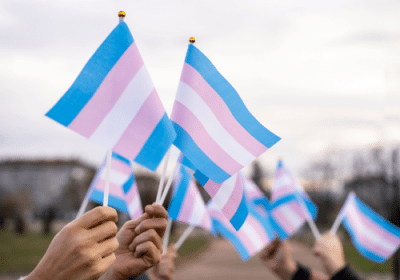
Why Visibility Is Not the Same as Belonging
It is tempting to speak about transgender mental health as if it were an internal fragility, something located within the individual. But psychological realism asks us to widen the lens.
The distress many transgender people experience is rarely about identity itself. It emerges from the worlds they must move through.
It is difficult to thrive psychologically in a world that keeps asking you to justify your reality.
For many transgender people, this can mean:
- Constantly assessing whether a space is safe
- Feeling pressure to explain or defend their identity
- Assessing whether a question is curiosity or interrogation
- Experiencing visibility without genuine acceptance
- Living with ongoing psychological vigilance
The nervous system does not distinguish between a televised debate about your existence and a personal rejection. The body registers exposure.
Visibility is not the same as belonging. You can be seen and still feel profoundly alone.


Belonging means being allowed to exist without constant explanation. It means dignity without debate. It means your identity is not a topic of public consumption.
How Constant Scrutiny Affects Transgender Mental Health
Many people might say they “don’t mind”, until they are asked to understand.
Understanding requires proximity. It requires relinquishing certainty and invites us to tolerate discomfort.
Psychologically, scrutiny creates shame, the experience of being seen and found wanting, especially in environments where safety is not guaranteed.
When every interaction carries the possibility of misgendering, questioning, or ideological disagreement, the mind adapts. Hyper-awareness becomes a strategy. Humour becomes armour. Ingenuity becomes survival.
Courage is often praised as a virtue, but it is also what people are forced to develop when safety is not guaranteed.
And yet, resilience can coexist with exhaustion. Strength can sit beside vulnerability.
The desire of many transgender people is profoundly ordinary: to work, to love, to move through the world without being a statement.
Over time, this kind of scrutiny can lead to:
- Heightened anxiety and constant vigilance
- Emotional exhaustion from ongoing self-monitoring
- Internalised shame and self-doubt
- The need to mask or soften one’s identity
- Reliance on coping mechanisms such as humour or detachment
Courage is often praised as a virtue, but it is also something people are forced to develop when safety is not guaranteed.
And yet, resilience can coexist with exhaustion. Strength can sit beside vulnerability.
The desire of many transgender people is profoundly ordinary: to work, to love, to move through the world without being a statement.
Why Does Transgender Mental Health Deserve Attention? What the Research Reveals
The difficulties transgender people face are not simply internal struggles, but often the result of external pressures. When we consider mental health, research reinforces why paying attention to transgender mental health matters. It is not an abstract debate or social concept. It is a matter with real psychological consequences for a group that remains particularly vulnerable.
Research consistently shows that transgender people are among the groups most at risk for mental health difficulties. Large population studies, such as Eccles et al. (2024), have found that transgender and gender-diverse individuals experience significantly higher rates of:
- depression
- anxiety
- substance use disorders
- suicidal thoughts
Compared to cisgender populations.
Further studies across Europe and North America indicate that between 22% and 43% of transgender people report having attempted suicide at some point in their lives, a rate far higher than in the general population.
A 2023 study from the Williams Institute at the UCLA School of Law reported that:
- 81% of transgender adults in the U.S. have thought about suicide
- 42% have attempted suicide
- 56% have engaged in non-suicidal self-injury
These numbers are stark. But they are often misunderstood.
Higher rates of mental health distress do not emerge in isolation. Psychological research consistently points to the environments transgender people must navigate, where identity is often questioned, scrutinised, or debated.
When we look more closely, the story the data tells is not about identity itself, but about the pressures that surround it.
Psychological research consistently identifies a set of overlapping stressors. Many transgender people experience:
- chronic social scrutiny, where their identity becomes something to be explained or defended
- family rejection
- bullying
- discrimination in education, employment or healthcare
- concerns about personal safety
- everyday risks such as misgendering, misunderstanding, or unwanted exposure
Over time, these experiences create what psychologists describe as minority stress, a form of chronic psychological strain that arises when someone’s identity is stigmatised or socially contested. Rejection, harassment, social exclusion, and the expectation of prejudice accumulate over time, increasing vulnerability to depression and anxiety.
A recent study of transgender and gender-diverse youth also shows that minority stress operates on multiple levels.
- External pressures such as bullying, victimisation, and discrimination
- Internal vigilance, including assessing when it is safe to be visible and when concealing one’s identity may be necessary for safety
Over time, the mind and body adapt to these conditions. People may begin scanning for danger. Confidence and self-esteem can erode when recognition from others feels uncertain or conditional. Feelings of shame, isolation, or not belonging may emerge, not because of who someone is, but because of how they are treated.
And yet, these outcomes are not inevitable. Research also shows that supportive relationships and affirming environments can significantly reduce these risks.
And this is where relationships begin to matter most.
How Can We Support Loved Ones who are Transgender?
Mental health challenges do not arise simply because someone is transgender. They often emerge in response to persistent stigma, scrutiny, or isolation.
This is where research offers hope. One factor consistently makes a measurable difference to transgender mental health: supportive environments. Specifically, relationships that offer recognition, safety, and continuity.

Studies repeatedly show that supportive relationships are one of the strongest protective factors for transgender mental health. When transgender individuals are met with acceptance by family, partners, friends and communities, rates of depression, anxiety, and suicidality decrease significantly.
Recognition and dignity are not abstract ideals; they have a measurable psychological impact.
Behind every statistic is a person navigating visibility, vulnerability, and the simple human need to belong.
Support often begins in the relational space. When someone transitions, the emotional experience rarely belongs to one person alone. Families, partners, and loved ones may find themselves adjusting to change in ways they did not anticipate.
A parent may feel pride and grief in the same breath. They may fear losing the child they imagined, while wanting deeply to protect the one in front of them. Partners may grapple with questions about identity and attraction. Siblings may find themselves balancing loyalty with confusion.
These reactions are not uncommon. At its core, this is rarely a story about ideology. It is about attachment, and the fear of losing connection with someone we love.
For transgender people, this relational space can be particularly complex. They may carry not only their own vulnerability, but also the emotional responses of those around them. When safety in the wider world feels uncertain, supportive relationships can transform visibility from exposure into belonging.
Support does not require perfect understanding. Supporting loved ones who are transgender often begins with small but meaningful gestures, such as:
- listening with curiosity
- respecting names and pronouns
- allowing space for honest conversations
- recognising that love can evolve alongside understanding
The most powerful message many transgender people receive is not certainty, but reassurance: you are not alone in this.
Because when visibility meets compassion rather than scrutiny, vulnerability no longer has to be carried alone.
How Can Therapy Help Support Transgender People and those who are Gender-Questioning?
If visibility exposes, therapy can shelter.
For many transgender and gender-questioning people, daily life can feel like a series of negotiations.
About safety, language, presentation, disclosure. Therapy offers a different rhythm. It becomes one of the few spaces where you are not required to educate, defend, or perform.
Instead, you are invited to arrive.
Working With Gender Dysphoria
Gender dysphoria is often spoken about clinically, but lived viscerally. It can show up as discomfort in the body, distress around social roles, or an aching sense of misalignment between inner knowing and external perception.
Therapy does not rush to fix or define. Instead, it helps untangle.
We explore questions such as:
- When does the discomfort intensify?
- What soothes it?
- Is this dysphoria, shame, fear, or a mix of all three?
- What would relief look like in your life?
Sometimes dysphoria is loud and unmistakable. Sometimes it is quiet, entangled with anxiety, depression, or long-standing self-criticism. Therapy creates room to differentiate these experiences, so that decisions, whether social, medical, or relational, come from clarity rather than urgency alone.

How Can Therapy Support Gender Questioning?
Therapy can help you bring together different parts of your life and identity into a more cohesive and grounded sense of self.
- It supports you in making sense of your past alongside your present identity.
- You can explore how family, culture, faith, and relationships fit within your evolving self.
- Therapy helps reduce the feeling of being split between different roles or identities.
- It works to integrate these experiences into a more connected and stable sense of self.
- Integration may involve grieving aspects of life that no longer feel aligned.
- It can also include reclaiming parts of yourself that were previously hidden or suppressed.
- You can develop a more compassionate and accepting relationship with your body.
The focus is on becoming more fully yourself, rather than becoming someone new.
Family and Gender Transition: Navigating Change Together with Family Therapy
No one transitions alone. Families are relational systems, when one person changes, everyone feels it.
Alongside love, there may be grief for imagined futures, fear about safety, guilt, confusion, or uncertainty about what to say. These reactions do not automatically mean rejection. More often, they reflect attachment and the fear of losing connection.
When these emotions remain unspoken, distance can grow. This may look like:
- The trans family member feeling scrutinised or invalidated
- Parents or partners silencing their own vulnerability, worried it will cause harm
- Conversations becoming cautious, tense, or avoided altogether
Family therapy offers a space where these complexities can be held safely. The aim is not to debate identity, but to protect relationship.
In this space, conversations can slow down. This allows:
- Fear to be named without becoming accusation
- Vulnerability to be expressed without shame
- Love to be communicated without conditions
You can love your child and feel overwhelmed.
You can need time and still be committed.
With support, families often move from reaction to reflection, and in doing so, rediscover belonging not as certainty, but as presence.
At its heart, therapy offers something profoundly simple and radical: a relationship where you do not have to justify your existence.
In a world where visibility can feel exposing, therapy can be a place where you are seen and safe.
And sometimes, that is where healing begins.
Beyond Visibility: Towards Safety and Belonging
On Transgender Visibility Day, we can celebrate progress. But we can also pause.
Visibility, on its own, is not enough. To be seen without safety is to remain exposed.
To be recognised without belonging is to remain alone.
The challenges many transgender people face are not rooted in identity itself, but in the conditions surrounding it. In scrutiny, uncertainty, and the constant negotiation of whether it is safe to be visible.
And yet, the same is true in reverse.
When people are met with dignity, respect, and care, something shifts. Visibility becomes less about exposure and more about presence. Belonging becomes possible.
Sometimes, what matters most is allowing someone to exist without explanation.
For those navigating these experiences, support can make a meaningful difference.
At Leone Centre, whether in London or online, our experienced therapists are here to help.
Because mental health does not begin with visibility alone.
It begins where visibility meets safety.
- About the Author
- Latest Posts

Co-founder and director of Leone Centre, 20+ years of experience supporting people, and offering valuable knowledge through Couples Counselling and Individual Counselling. Before becoming a therapist, I worked in the financial sector.