

Menopause is a natural biological process marking the conclusion of a woman’s reproductive years. Clinically, it is defined as the point at which menstruation has ceased for 12 consecutive months, most commonly occurring between ages 45 and 55, though the timing varies considerably.
Yet menopause is more than a medical milestone. It is a developmental threshold: one that unfolds across the body, psyche, relationships, and, for many, the deeper strata of meaning and purpose. Approached with understanding rather than alarm, menopause reveals itself not as decline, but as transition.
The Biological Reality
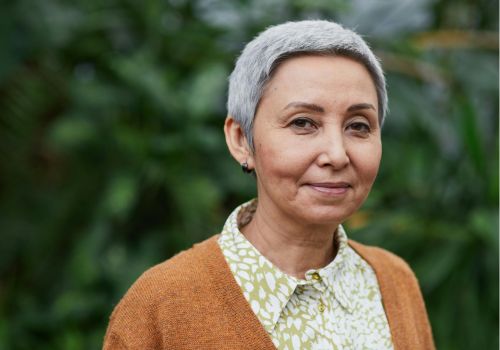
Menopause is initiated by a gradual reduction in ovarian hormone production, particularly oestrogen and progesterone. As these hormones decline, ovulation ceases and menstrual cycles come to an end. This hormonal reorganisation affects multiple systems within the body and may give rise to a range of physical, emotional, and cognitive changes.

Subscribe to stay updated with the latest blog posts from Leone Centre.
Common symptoms include:
- Hot flashes and night sweats
- Sleep disruption and fatigue
- Mood fluctuations, anxiety, or low mood
- Vaginal dryness and changes in sexual comfort
- Reduced libido
- Cognitive changes such as memory lapses or difficulty concentrating
These experiences are not uniform. Each woman’s physiological and psychological response to menopause is distinct, shaped by genetics, health history, life context, and relational environment.
The Phases of Menopause
Perimenopause: The transitional phase in which hormonal fluctuations begin and menstrual cycles become irregular
Menopause: The defined point at which menstruation stops
Postmenopause: The years that follow, during which the body stabilises into a new hormonal equilibrium
In some women, menopause or perimenopause begins earlier than expected due to genetics, chemotherapy, or surgeries such as removal of the ovaries or uterus. When unexpected, this early onset can add further distress and emotional disruption.
Lower estrogen levels are associated with increased risk of osteoporosis, cardiovascular changes, and shifts in metabolism and body composition. Management may include lifestyle adaptations, hormone replacement therapy for some women, and complementary or integrative approaches. What remains essential is individualised care rather than prescriptive solutions.

The Deeper Meaning of the Menopause Transition
Across cultures and traditions, menopause has long been recognised as a rite of passage rather than a pathology. Where contemporary narratives often emphasise loss, older frameworks understood menopause as a movement into authority, discernment, and inner coherence.
This stage marks a turning inward of creative energy. The body no longer directs its vitality toward reproduction, and this shift often brings an intensification of inner life. Reflection deepens. Intuition becomes more pronounced. What was once oriented toward caretaking and accommodation is gradually reorganised toward clarity and self-definition.
In archetypal terms, menopause corresponds with the emergence of the wise woman, an embodiment not of youth, but of vision. This archetype is not sentimental. It is grounded, perceptive, and unencumbered by the need to please or perform.
Physical symptoms, within this framework, can be understood not solely as disruptions but as signals of recalibration. The system is reorganising itself. The pace slows. What has been deferred or suppressed may surface for integration and resolution.
Menopause, in this sense, is not an ending. It is a consolidation.
Cultural Meaning and the Experience of Menopause
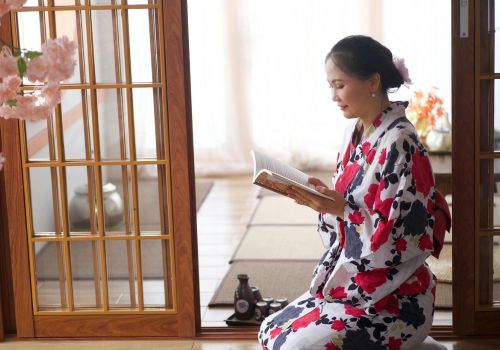
Cultural mindset significantly shapes how menopause is experienced. In societies where it is understood as a natural developmental transition rather than a medical problem, women often report fewer and less distressing symptoms. Japan is frequently cited as an example, where menopause is framed as a normative stage of maturation rather than decline.
Language reflects this orientation. The traditional Japanese term for menopause, konenki, translates as “the stage of renewal”, framing bodily change as part of a broader developmental transition rather than a decline. In the absence of a narrative of loss or failure, physical symptoms are often met with less anxiety and resistance.
This does not diminish the role of biology, but highlights the interaction between physiology and meaning. Expectations shape experience. When menopause is anticipated as loss, it is often endured. When understood as transition, it is more readily integrated.
Menopause as a Relational Transition
Menopause does not occur in isolation. It enters the relational field, often quietly, reshaping intimacy, communication, and emotional rhythm.
Changes in sleep, energy, desire, and mood inevitably influence how partners relate to one another. Misunderstandings may arise when physical or emotional shifts are interpreted personally rather than contextually. What appears as withdrawal or irritability is often the expression of a body and psyche in transition.
In relationships, menopause invites new conversations:
- About desire without assumption
- About discomfort without blame
- About ageing without avoidance
When these conversations are absent, distance may form. When they are welcomed, relationships often evolve toward greater honesty and emotional maturity.
As Esther Perel observes, relationships are not static. Menopause alters the relational ecosystem, requiring both partners to renegotiate roles, expectations, and forms of closeness.
Menopause in Same-Sex Female Relationships
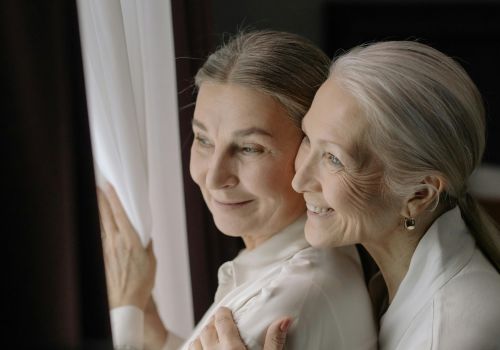
In female same-sex relationships, menopause can introduce complexities that are both subtle and deeply felt. Shared embodiment does not guarantee shared experience. One partner may be navigating significant physical or emotional changes, while the other feels relatively unaffected.
Expectations of intuitive understanding can become a source of tension when differences are left unspoken. Desire may shift asymmetrically. The meaning assigned to these changes often matters more than the changes themselves.
This phase calls for differentiation rather than assumption. Intimacy matures when curiosity replaces certainty, and when difference is met with respect rather than interpretation.
Therapeutic Support During Menopause
Couples and individuals often seek therapy when changes begin to feel unmanageable or when connection feels strained. Therapy does not imply pathology; it offers a space for orientation during transition.
Couples Counselling
Couples counselling can help partners:
- Develop a shared language for change
- Reduce emotional reactivity
- Restore emotional safety
- Navigate identity shifts without disconnection
- Strengthen the sense of partnership during transition


Psychosexual Therapy for Couples
Psychosexual therapy focuses specifically on intimacy and desire. During menopause, it helps couples distinguish physiological change from emotional meaning and explore intimacy beyond habitual patterns.
Rather than returning to what once was, the work becomes about creating an intimate life that reflects who the partners are becoming.

Individual and Psychosexual Therapy
For women, menopause often reshapes internal narratives around desirability, femininity, and worth. Individual therapy offers space to examine these narratives with nuance, releasing cultural myths that equate value with youth or fertility.
This inner recalibration often restores confidence, agency, and embodied presence.
A Mature Reframing
Menopause is not a disruption to be endured, nor a problem to be solved. It is a developmental passage that asks for attentiveness, relational honesty, and respect for complexity.
When supported appropriately, menopause often becomes a period of consolidation rather than loss of clearer boundaries, deeper intimacy, and more authentic expression.
Desire does not disappear at this stage of life. It changes form.
Intimacy does not diminish. It refines.
Menopause marks not the closing of a chapter, but the assumption of a quieter, steadier authority. One that is rooted not in reproduction or performance, but in presence, discernment, and depth.
For many, having thoughtful, attuned support during this transition can make the difference between feeling adrift and feeling accompanied. At Leone Centre, our experienced therapists offer a space to reflect, integrate, and navigate this passage with care, whether in person in London or online.
- About the Author
- Latest Posts

Co-founder and director of Leone Centre, 20+ years of experience supporting people, and offering valuable knowledge through Couples Counselling and Individual Counselling. Before becoming a therapist, I worked in the financial sector.