

Infidelity can feel like the ultimate betrayal: a rupture, a moral failure, an ending. Yet, the journey of healing after infidelity can also become a path to transformation and renewed intimacy.
An affair can shatter the familiar landscape of love, leaving behind a silence filled with questions: “Who are we now?” “What remains when the dream has broken?”
But what if, beneath the pain of betrayal, there is also an opportunity for transformation?
Amid the lies and secrecy, the chaos and despair, there may whisper a quiet longing – not simply to find another – but to rediscover the forgotten corners of our own souls, the selves we left behind along the way.

Subscribe to stay updated with the latest blog posts from Leone Centre.
In the ruins of betrayal, something tender can stir: a deeper honesty, a desire to live and to love with eyes open.
For some, the affair marks an ending. For others, it becomes an unexpected beginning; an invitation to rebuild, not what once was, but what might yet be.
Why Do People Cheat?
Understanding why infidelity happens is one of the first steps in healing.
A common myth is that people cheat because of a lack of love. However, we know that from what goes on in the therapy room, people rarely cheat because they have stopped loving their partner.
More often, they cheat because they have stopped loving themselves, or rather, the version of themselves that the relationship mirrors back to them.
At the beginning of a relationship, love feels expansive. We fall in love not only with our partner but with the version of ourselves we become in their presence: more playful, alive, or creative.
Over time, that same closeness can begin to feel more like confinement. After a while of being together, we can become merged and enmeshed with one another, losing the delicate space between us.
That space is where desire lives.
An affair can become, paradoxically, an act of escape. Not necessarily from the relationship, but from the version of the self that feels stifled within it.
Can a relationship survive cheating? The answer depends on whether both partners are willing to transform the relationship and confront what led to the affair, rather than simply the act itself.

Understanding the Psychology Behind the Affair, Beyond the Common Assumptions
People cheat for many reasons, and those reasons are often more about identity than about sex.
Common reasons people cheat include:
- Emotional disconnection or feeling unseen
- A need for validation or excitement
- Boredom or loss of desire in long-term relationships
- Avoidance of conflict or unresolved resentment
- Opportunity and poor boundaries
- Searching for lost parts of self: independence, vitality, or confidence
Humans crave both security and freedom; the comfort of the known and the excitement of the unknown. We want the familiar embrace that soothes us, and also the adventure that makes us feel alive again.
These desires often clash. When routine and predictability replace novelty and surprise, some people begin to look elsewhere for vitality and connection.
For some, an affair might represent a search for validation, vitality, or potency. For others, it may reflect a longing to reconnect with lost parts of the self such as independence, desire, or vibrancy.
It is a myth that “men cheat more than women”. According to research that linked correlation between affairs and gender, women reported equal or greater infidelity than men.
Women were also more likely to end relationships, seek new ones, and cite unhappiness. This suggests that their affairs often reflected a longing for a deeper, more fulfilling connection.
Can a Relationship Survive Cheating? Confronting the Betrayal
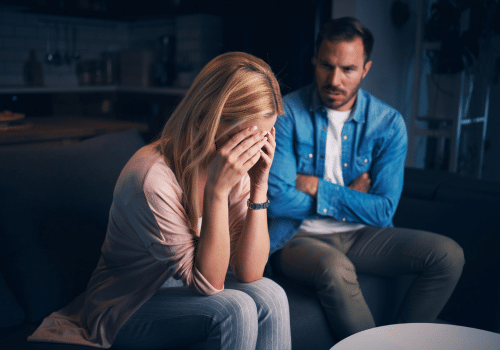
The deepest betrayal is not always the act itself, but the shattering of the illusion.
We believed the story we built together: that we were immune, that love would protect us, that we truly knew each other.
When that illusion breaks, we confront not only our partner’s deception but also the fragility of our own narrative.
Couples therapy is an essential space for truth-telling, allowing both partners to challenge their narratives and ask: how to recover from an affair and move forward together? As I often tell couples in therapy for affairs,
“The relationship as you knew it is over. But that doesn’t mean the relationship must end. It means it must transform.” – Cristina Vrech
Couples Therapy After an Affair: The Path to Rebuilding Trust
In the wake of infidelity, couples therapy is not a court of judgment, but a place of truth.
Within its walls, the relationship itself becomes the true client; a living, breathing entity to be tended, understood, and, perhaps, reborn.
How Couples Therapy Helps Rebuild Trust
- A Safe Space for Honest Conversation
Therapy provides a neutral, compassionate environment where both partners can express their feelings without fear of judgment or retaliation.
- Understanding What Happened
Through guided sessions, couples explore the deeper context of the affair, what it meant, what was missing, and what patterns contributed to the disconnection.
- Rebuilding Trust Through Action
Trust is restored not through promises, but through consistent behaviour: transparency, accountability, and emotional presence.
- Healing the Betrayed Partner’s Wounds
The betrayed partner needs space to grieve and to have their pain acknowledged. Therapy helps them regain a sense of safety and self-worth.
- Creating a New Relationship Model
Couples therapy helps partners build a “new version” of their relationship, one based on honesty, communication, and choice rather than illusion or assumption.
It is a delicate process. Some couples do not survive it, but many do.
Those who stay and face the pain often rebuild something stronger, more honest, and more alive.
The Myth of Monogamy as Default
Marriage was designed for a time when people lived for forty years, not eighty.
Today, we ask one person to give us what an entire village once provided: security, passion, friendship, stability, excitement, and mystery.
We want a partner who feels like home and an adventure at the same time.
Monogamy is not a default setting. It is a choice that must be renewed, redefined, and reimagined as we evolve.

Healing After Infidelity and Moving Forward
Many couples try to hide their thoughts and feelings, hoping to brush them quietly under the carpet, as though pain, once unseen, might simply dissolve.
But “carpets” can only hold so much. Over time, what has been swept away gathers weight and form. It rises in the night as silence, sharpens into resentment, or settles between two people as a cold and aching distance.
The work begins as we lift it together, slowly, gently, pulling out the grief, the anger, the secrets, the dust of unspoken things. It is uncomfortable, sometimes excruciating, yet it is the only way forward.
The illusion that real love should be effortless or easy is a cruel one. True love – living love – is unruly, imperfect, full of contradictions. It asks us to face what we most wish to avoid, and still to remain.
The Art of Rebuilding Trust and Beginning Again
The task is not to return to what once was. That world is gone. The old relationship – the one that allowed the betrayal to take root – no longer exists.
When couples say, “We just want things to go back to how they were,” I gently remind them: you cannot go back. But you can begin again, as two people meeting anew, stripped of illusion, with eyes and hearts wide open.
An affair can feel like the most unbearable betrayal, and yet, in its aftermath, something remarkable can emerge. It exposes what was hidden, neglected, or quietly dying. It demands that we ask: Who am I now? Who might we become, if we dare to tell the truth?
Real love is not meant to keep us safe and comfortable. It is meant to grow us, to refine us, to challenge us into deeper living.
And sometimes, the greatest journey a couple can take is not the one that leads them apart, but the one that allows them to find each other again, as if for the very first time.
Begin Your Healing Journey with Couples Therapy at Leone Centre
If you’re interested in exploring couples therapy at Leone Centre, we are here to support you.
We offer both online and in-person sessions in London.
Learn more about couples therapy.
- About the Author
- Latest Posts

Co-founder and director of Leone Centre, 20+ years of experience supporting people, and offering valuable knowledge through Couples Counselling and Individual Counselling. Before becoming a therapist, I worked in the financial sector.


