

Conflict is not a sign that a relationship is failing. Two people can love one another deeply and still disagree, disappoint each other, misunderstand each other and lose their way in moments of tension. The strength of a relationship is not measured by the absence of conflict, but by the couple’s capacity to repair: to return, to take responsibility for their impact and to find one another again.
Yet some arguments seem to resist resolution. They return again and again, dressed in different clothes but carrying the same emotional charge.
Perhaps the subject is money. The washing up. Parenting. Intimacy. Someone arriving late or forgetting to send a message. On the surface, the topic changes. Underneath, the conversation may be remarkably familiar.
Do I matter to you? Can I depend on you? Do you respect me? Am I alone in this relationship?
 Enjoying reading this post?
Subscribe to stay updated with the latest blog posts from Leone Centre.

We rarely respond only to what has happened. We also respond to the meaning we attribute to it. A forgotten message may become evidence that we are unimportant. A request for space may be experienced as rejection. A question about money may feel like criticism, control or a lack of trust.
These meanings are often shaped long before the present relationship. Earlier experiences can imprint beliefs about love, safety, closeness and conflict: that our needs are too much, that vulnerability is dangerous, that love must be earned, or that disagreement will inevitably lead to abandonment.
The recurring argument is therefore rarely only about the event itself. It is also about the beliefs, fears and longings that the event awakens.
Couples therapy can help partners look beyond who is right and begin to understand the pattern they are creating together. It offers an opportunity to slow the argument down, recognise the meanings being assigned and hear the deeper emotional conversation beneath the words.
Throughout this post, we’ll explore why these patterns develop, what they may be trying to tell you, and how couples therapy can help you move beyond them.
The aim is not to create a relationship without conflict. It is to help couples disagree without losing their connection, repair when hurt occurs and respond to one another with greater awareness, flexibility and care.
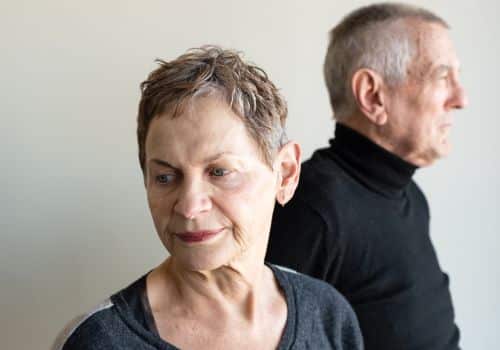
Why Do We Keep Having the Same Argument?
We like to believe we’re arguing about facts. In reality, we are often arguing about meanings.
One partner says, “You’re always late.” The other hears criticism. What remains unspoken is that, for the first partner, lateness may have quietly come to mean, “I don’t matter to you.” For the second, hearing disappointment may awaken an entirely different story: “No matter what I do, I will never be enough.”
The conversation is no longer about time.
It has become about significance, worth and belonging.
Conflict often carries hidden meanings that neither partner intends to communicate directly. Beneath recurring disagreements, we may be trying to protect or express a deeper emotional need, such as:
- feeling important, appreciated or respected
- a longing for emotional closeness
- fear of rejection or abandonment
- the tension between independence and togetherness
- the need for emotional safety
- questions of trust and loyalty
- fear of losing yourself within the relationship.
These deeply human concerns often disguise themselves as everyday frustrations, leaving couples believing they’re arguing about the practical issue when they’re really speaking from a much more vulnerable place.
As Leone Centre couples’ therapist Susan Harris explains:
“Although arguments are often triggered by daily mundane incidents it is the meaning attributed to the words or behaviour and the feelings they evoke that drives the repetitive nature of the interaction.”
Couples therapy can gently slow these moments down, helping each partner discover not only what they are saying, but what they are longing to have understood.
The reassuring news is that many couples return to the same disagreements. These conversations return because they touch something emotionally significant for each partner.
Healthy relationships aren’t defined by the absence of conflict, but by learning to understand what lies beneath it. In couples therapy, partners can begin to see that neither person is the problem, instead they recognise the pattern they’ve fallen into together. This shift is often where lasting change begins.
Why Does My Partner Never Seem to Hear Me?
Feeling unheard is one of the loneliest experiences within a relationship.
Ironically, during conflict both partners often feel exactly the same way.
Each is trying to explain their experience while simultaneously protecting themselves from further hurt. As emotions rise, listening quietly disappears and survival takes over.
Within the context of couples therapy, Leone Centre therapist Susan Harris describes her approach this way:
“To interrupt the cycle and start to make sense of it I explore the behavioural interaction, the meaning of it to both parties and how they both feel.”
By slowing the conversation down, something different becomes possible.
“Slowing the process down and encouraging each member of the couple to listen while the other describes their experience and feelings, enables a softening and different interpretations of an interaction to be voiced.”
For perhaps the first time in a long time, partners stop preparing their defence, and begin hearing each other’s emotional reality.
Being heard doesn’t necessarily mean being agreed with, but feeling understood.

Are We Actually Arguing About the Real Problem?
Often, the visible disagreement is simply the doorway.
We rarely become emotionally overwhelmed because of a dirty plate or an unanswered message alone. Those moments become powerful because they connect with something already living inside us.
For one person, a lack of affection may stir fears of abandonment. For another, repeated criticism may awaken long-standing feelings of shame or failure. The external event may be identical, but the emotional experience rarely is.
One of the most valuable shifts that happens in couples therapy is moving away from asking, “Who’s right?” and instead becoming curious about, “What does this moment mean to each of us?”
As couples begin to translate behaviour into emotional meaning, frustration gives way to understanding. Instead of asking, “Why did you do that?”, they begin asking, “What did that moment mean to you?”
That question often changes everything.


Why Do We Keep Misunderstanding Each Other?
One of the greatest paradoxes in relationships is that two people can love each other deeply while consistently misunderstanding one another.
Within couples therapy, Emotionally Focused Therapy (EFT) understands this through the lens of what is known as a negative cycle. Rather than seeing one partner as the problem, EFT recognises that both people are responding to the same pattern in different ways.
Typically, one partner may:
- pursue or protest
- become critical
- seek reassurance or demand greater connection.
Meanwhile, the other may:
- withdraw
- become defensive
- shut down emotionally
- feel overwhelmed or inadequate.
Neither response is the real problem. The cycle is.
The more one partner reaches, the more the other retreats. The more one retreats, the louder the reaching becomes. Eventually, both people feel alone, despite trying so hard to protect the relationship.
In couples therapy, the focus shifts away from identifying who is at fault and towards recognising the pattern they have become caught within. Our EFT-trained therapists, Stelios Christodoulou and Rasa Motiejune, use this approach to help couples slow these interactions down, make the cycle visible, and reconnect with the underlying emotions and attachment needs that often lie beneath conflict. Once the cycle is visible, it becomes something they can understand and face together, rather than something that continues to pull them apart.
“A recurring argument is often a sign that the couple is caught in a negative cycle, not that the issue itself is unsolvable. From an EFT perspective, couples therapy helps you slow down that cycle, understand the vulnerable emotions driving it, and recognise how each partner’s moves are actually protests for connection rather than attacks. When partners begin to see the pattern — and the longing underneath it — they can shift from defensiveness to responsiveness. The goal isn’t to eliminate disagreement but to create a safer emotional bond, so the same trigger no longer pulls you into the same fight.”
– Rasa Motiejune, Leone Centre Therapist
Why Do Small Issues Turn Into Big Fights?
Because today’s disagreement is rarely just about today.
Our closest relationships have a remarkable way of touching places within us that were formed long before we met our partner. A seemingly insignificant moment can awaken much older feelings of:
- rejection
- shame
- failure
- being invisible
- not being good enough
- fear of abandonment
This is a central idea within Imago Relationship Therapy, which suggests that intimate relationships often activate unresolved wounds and unmet needs from earlier life. Without realising it, we can find ourselves responding not only to our partner, but also to echoes of childhood experiences or previous relationships.
Seen this way, the repeated argument becomes more than conflict. It becomes an invitation to understand ourselves, and each other, with greater compassion. In this way it can be a potential doorway to healing rather than blame.
Instead of asking:
“Why does this always happen?”
Couples begin to wonder:
“What older story is this moment reminding me of?” or even, “What part of me is being touched here?”
Those questions often create the space where lasting change begins.

How Do We Stop Getting Defensive During Arguments?
Defensiveness is often misunderstood. It is usually protection, not indifference, and rarely a sign of a lack of love. More often, it is an attempt to protect ourselves from feeling blamed, rejected or inadequate.
Over time, couples naturally develop protective bonding patterns that once helped them feel emotionally safe but now keep them stuck. You may recognise patterns such as:
- one partner moves closer while the other needs space
- one escalates while the other freezes
- one seeks reassurance while the other seeks independence
- one expresses emotion openly while the other withdraws internally
Neither response is inherently wrong. Both are attempts to protect the relationship, and themselves.
“When couples can start to be curious about their partner and not respond defensively or critically, reactivity and arguing lessens.”
–Susan Harris, Leone Centre Therapist
Curiosity changes the emotional climate of a relationship. It interrupts defensiveness, replaces assumption with understanding, and creates space for each partner to respond to what is really being communicated beneath the conflict.
How Can We Stop Repeating the Same Fight?
Lasting change rarely comes from learning the perfect communication technique.
It comes from changing the emotional dance the couple has been performing together.
Couples therapy provides a safe, supportive space where partners can step out of this cycle and understand what is happening beneath the conflict. It can help couples to:
- Recognise their negative interaction cycle
- Understand what each person is protecting
- Identify underlying emotional needs
- Express vulnerability more safely
- Listen with curiosity instead of preparing a defence
- Build greater emotional security and trust
As Leone Centre therapist Tonia Forster reflects:
“Change happens when people feel heard, respected, and understood.”
The conversation changes because the relationship changes.
These are not easy conversations. But with the support of couples therapy, they become possible, and are often the conversations that relationships have been waiting to have all along.

How Can We Reconnect After an Argument?
Repair is one of the strongest predictors of relationship resilience.
The healthiest couples are not those who never argue. They are the ones who know how to find one another again afterwards.
Reconnection often begins with slowing down enough to ask questions that invite understanding rather than defence:
- What was happening for you in that moment?
- What did you most need from me?
- What did I misunderstand?
- What were you hoping I would hear?
Repair requires vulnerability and emotional safety.
Couples therapy creates a space where both partners can slow down enough to understand, not simply defend, their experiences.
When Should We Consider Couples Therapy?
Many couples imagine therapy is something you turn to only when the relationship is close to breaking down.
In reality, therapy is often most effective long before resentment becomes deeply rooted.
You may benefit from couples therapy if:
- you keep returning to the same unresolved argument
- conversations regularly end in defensiveness, withdrawal or silence
- one or both of you feels unseen or unheard
- emotional or physical intimacy has become difficult
- you feel more like opponents than partners.
Here at Leone Centre, our therapists also remain aware that every relationship exists within a wider context:
“As a systemic therapist, I will zoom out to explore the couple in their familial, social and cultural context. Cultural differences around gender for example can lead to different expectations of roles which leads to misunderstandings and discontent. Experience of trauma and abuse in other relationships and contexts may also be influence.”
-Susan Harris, Leone Centre Therapist
Relationships never exist in isolation.
Our families, culture, previous relationships and life experiences all shape how we love, protect ourselves and communicate.
Understanding those wider influences can transform the way partners see both themselves and each other.

Can Couples Therapy Really Help?
The purpose of couples therapy isn’t simply to stop arguments.
It’s to understand what the arguments have been trying to say all along.
When partners begin to recognise the emotional meanings beneath repeated conflict, something shifts. Criticism is understood as longing for connection, withdrawal as self-protection, anger as hurt, and defensiveness as fear. The relationship becomes less about winning an argument and more about understanding each other’s inner world.
Couples therapy can create the space for deeper understanding to grow, allowing the same disagreement that once felt impossible to become an opportunity for greater intimacy, empathy and connection.
If you find yourselves caught in repetitive cycles of conflict, you don’t have to navigate them alone. At Leone Centre, our experienced couples’ therapists offer both face-to-face counselling in London and online therapy, helping couples understand the patterns keeping them stuck and find new ways of relating to one another.
Sometimes the most important question isn’t, “How do we stop having this argument?”
It’s:
“What is this argument asking us to understand about each other that we haven’t yet been able to hear?”
- About the Author
- Latest Posts

Co-founder and director of Leone Centre, 20+ years of experience supporting people, and offering valuable knowledge through Couples Counselling and Individual Counselling. Before becoming a therapist, I worked in the financial sector.